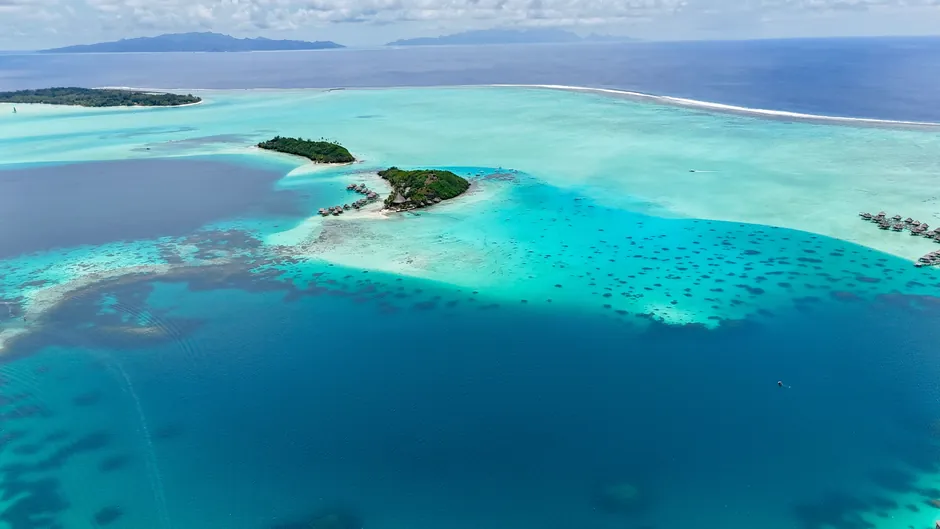
Baa Atoll, Maldives
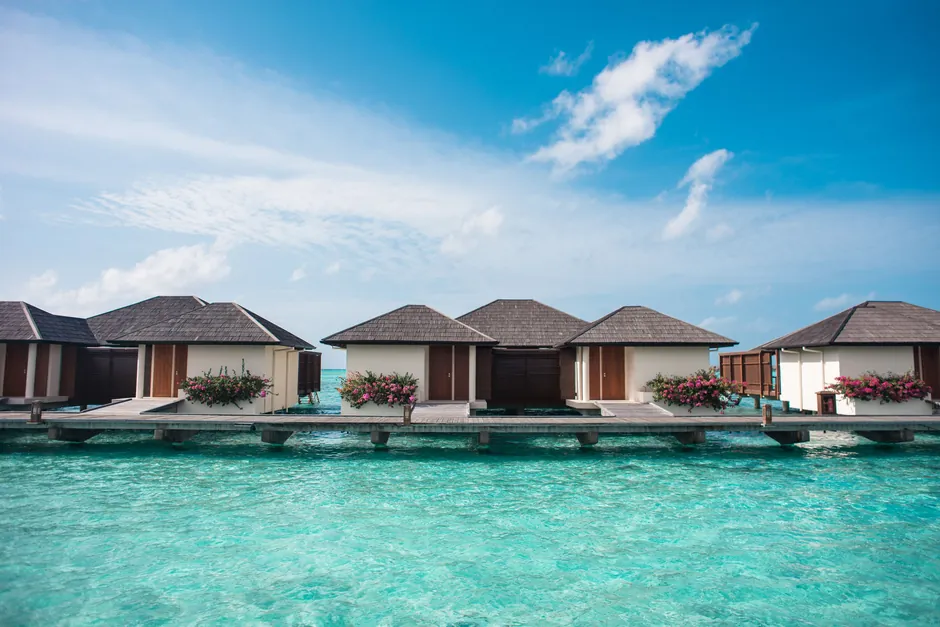
In short An overwater villa is chosen by what lies beneath it and which way its deck faces — the room itself is the least variable part. This edit gathers houses on stilts above the lagoon in the Baa and Raa Atolls of the Maldives and off Bora Bora, picked for water you can actually swim in below the ladder rather than for the glass panel alone.
Glass floors, a private ladder into the lagoon, and nothing between you and the horizon. Our favourite overwater villas — where the ocean is your front garden.
Hand-picked stays in this collection
| Where | Driest / clearest window | What the other months mean |
|---|---|---|
| Baa & Raa Atolls, Maldives | January to March. The Maldives Meteorological Service dates the dry northeast monsoon (Iruvai) to exactly these three months, and records 10 to 11 hours of sunshine a day in them against 7 to 9 in every other month. | December and April are transitional; the wet southwest monsoon (Hulhangu) runs from mid-May to November. The northern atolls average 1,779 mm of rain a year, the least in the country, and it normally falls as showers with sunny spells between rather than as all-day rain. |
| Hanifaru Bay, Baa Atoll — the exception | The wet half of the year. The peer-reviewed study of the bay places the manta feeding aggregation in the southwest monsoon and dates that window April to November; the national weather service dates the monsoon itself mid-May to November. The few weeks of disagreement do not change the direction. | Upwards of 250 reef manta rays gather here at peak feeding events, the largest known aggregation of the species anywhere. If the mantas are the reason for the trip, the weather calendar and the wildlife calendar point in opposite directions — and the wildlife one should win. |
| Bora Bora, French Polynesia | May to October — the cool season, which Météo-France defines by its lower humidity. | November to April is the warm, humid season. Météo-France notes that cyclones occur only within it and describes the risk as low. This is the exact mirror of the Maldives, so a trip that takes in both is a trip that compromises on one. |
Last updated: 2026-08-14 · Sources: Maldives Meteorological Service — Climate of Maldives , Armstrong et al. 2021, PeerJ — reef manta foraging in Hanifaru Bay , UNESCO — Baa Atoll Biosphere Reserve , Météo-France Polynésie française — Climat , Trans Maldivian Airways — FAQ
This collection currently holds 3 stays: The Lagoon Villa, The Overwater Suite, The Sunset Water Villa. Every one is picked by hand — we would rather show you three places worth booking than thirty that fill a page.
Nightly rates in this collection start at around €890 and reach about €1,240, depending on the house, the season and the room. Those are orientation figures rather than live rates — check dates with our booking partner for what you would actually pay.
An overwater villa is chosen by what lies beneath it and which way its deck faces — the room itself is the least variable part. This edit gathers houses on stilts above the lagoon in the Baa and Raa Atolls of the Maldives and off Bora Bora, picked for water you can actually swim in below the ladder rather than for the glass panel alone.
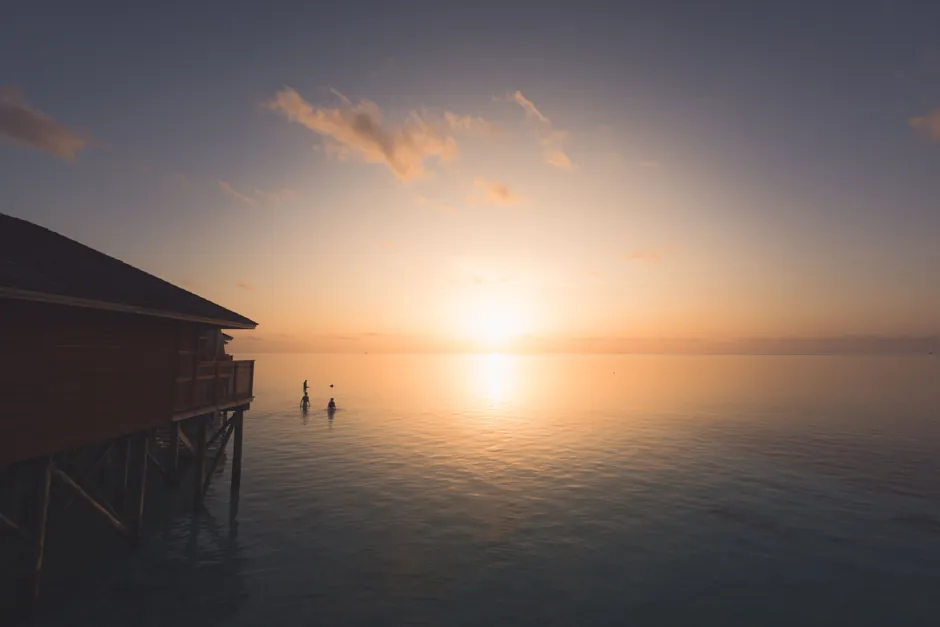
The label describes which way the deck faces, and almost nothing else. A sunrise villa has the light on the deck at breakfast and shade in the hottest part of the afternoon; a sunset villa does the reverse and pays for it with a warm deck at four in the afternoon. Where a resort prices the two categories differently, the sunset side is usually the dearer one — which is worth knowing before you assume it is the better one. The honest question is when you actually sit outside.
No. The ladder is standard equipment; usable water under it is not. Depth changes with the tide and with your position along the jetty, and over a shallow sand flat at low tide a ladder can end knee-deep. Where a villa stands over living coral, you should not be standing there at all. Two questions settle it before booking: how deep is the water beneath the ladder at low tide, and is the house reef reachable by swimming or only by boat.
It depends which ocean, because the two destinations in this edit run opposite calendars. The Maldives Meteorological Service dates the dry northeast monsoon to January, February and March — noticeably narrower than the November-to-April window most brochures print — and records 10 to 11 hours of sunshine a day in those months against 7 to 9 in every other. Bora Bora is the mirror image: Météo-France puts the cool, less humid season from May to October. The table further down this page sets both side by side.
In the Maldives, yes. Trans Maldivian Airways states that it flies only from sunrise to sunset and asks guests to land in Malé by 15:30 local time to reach the resort the same day; a later arrival means a night in Malé or Hulhumalé first, at your own cost. The return leg works the same way, so an early morning flight home can also cost you a night. Bora Bora is reached by a scheduled domestic flight from Tahiti instead — a timetable to make rather than a daylight window to beat.
The small things that turn a good trip into a seamless one — vetted, so you don't have to.
Skip roaming fees. An eSIM that works the moment you land in 190+ countries.
Get data from €4 →Flexible insurance for nomads and long trips — medical, gear and cancellations.
Compare cover →Skip-the-line tickets and hand-picked experiences at every destination.
Browse experiences →One unforgettable stay in your inbox every Sunday — plus our free PDF guide.
No spam. One email a week. Unsubscribe anytime.